What to do right now
Protect yourself and limit additional damage with these steps before restoration work begins.
- 1
If it is safe to do so, stop the water at its source or shut off the nearest supply valve.
- 2
If it is safe to do so, turn off electricity to the affected area from a dry location. Otherwise, stay clear and wait for qualified help.
- 3
Avoid contact with water that may be contaminated. If it is safe to do so, keep people and pets out of the affected area.
- 4
If it is safe to do so, move dry, portable belongings away from the affected area without crossing standing water.
Water mitigation and restoration, from first call to final repair
Water damage can spread into drywall, flooring, insulation, basements, and crawlspaces. Acting quickly reduces loss and helps prevent secondary damage. Here is what to expect once you call: we stop the source, remove standing water, find hidden moisture in walls and floors, and dry the structure to limit further damage and mold growth. Then we repair and restore what the water damaged. We serve property owners across Coeur d’Alene, Post Falls, Hayden, Rathdrum and the rest of Kootenai County.
A water stain on the ceiling in winter can come from an ice dam on the roof. See ice dams in North Idaho: how they cause ceiling leaks.
Mitigation first, then restoration
Water damage mitigation is the emergency work: water extraction, containment and structural drying to stop the damage from spreading. Restoration is what follows: damaged material is removed and replaced, then we rebuild with drywall, flooring, trim and paint, so you get the room back rather than a dried shell. When restoration leads to larger reconstruction, J. Barton Construction is available as a licensed, bonded, and insured general contractor serving Coeur d’Alene and Kootenai County.
Common causes of water damage in North Idaho
- Burst or frozen pipes during winter cold snaps
- Snowmelt and spring rain that flood basements in March and April
- A failed sump pump in a basement or crawl space
- Appliance failures: water heaters, washing machines, dishwashers
- Roof leaks from heavy snow, ice dams, wind and seasonal rain (roof repair)
How we dry the structure
Our team is professionally trained and certified in water damage restoration and follows the IICRC S500 standard. We take moisture readings before anything is moved and use moisture meters and moisture mapping to find water you can’t see. Air movers and dehumidifiers dry the structure, and we monitor them daily until readings return to normal. We set drying procedures, control temperature, and adjust the approach as conditions change, which helps avoid secondary damage caused by improper dehumidification or excessive heat. Hardwood floors, subfloors and wall cavities usually take longer. Our guide on how long water damage takes to dry explains why.
Documentation for your insurance claim
Early mitigation can be crucial in preserving your ability to make an insurance claim. We document the conditions we find and the procedures we use, including moisture readings, so you have a clear record for your adjuster. Coverage depends on your policy and on what caused the damage, so call your insurer early.
What affects the cost of water damage restoration
Cost depends on what we find on site. The main factors are:
- How much water there is and how far it spread
- Whether the water is clean or contaminated
- How long materials stayed wet
- What got wet: carpet and pad, hardwood floors, drywall, insulation
- How many days drying takes
- How much repair work follows
The consultation is free, with no obligation, and scope and price are agreed in writing before repair work starts.
When water damage leads to mold or fire cleanup
If a leak has led to mold, we also provide mold removal and mold remediation. To see whether that’s a risk for you, read can water damage cause mold? Our restoration services also cover fire damage, including the water left behind after a fire is put out. See our fire damage restoration page.
Water damage restoration: Coeur d’Alene, Post Falls and Kootenai County
We’re a family-owned company based in Coeur d’Alene, ID, licensed and insured in Idaho and Washington. Our 24/7 emergency response covers Coeur d’Alene, Post Falls, Hayden and Spokane, and our restoration services cover:
- Coeur d’Alene, ID and Hayden
- Post Falls, ID and Rathdrum
- Sandpoint, Kellogg and St. Maries
- The Spokane, Washington area
How we restore water-damaged areas
Our water damage restoration process follows the conditions we find, with documentation, containment, controlled drying, and written approval before repairs begin.
- 1
Stop the source and document conditions
We stop the source of the water, take moisture readings, and document the existing conditions and the procedures used during restoration.
- 2
Set safety and containment measures
We plan for worker and occupant safety, then establish containment and air filtration where needed to limit contaminants and protect areas such as the HVAC system.
- 3
Extract standing water
We use water extraction techniques to remove standing water from the affected areas so controlled drying can begin.
- 4
Dry, monitor, and adjust
We set up air movers and dehumidifiers, control temperature, monitor daily, and adjust the approach to avoid damage from improper dehumidification or excessive heat.
- 5
Manage contents and approve repairs
When needed, we remove and store contents so cleanup can proceed. We discuss and agree to all repairs in writing before starting them.
- 6
Inspect and complete the work
After repairs, we return stored contents, conduct a final inspection, and provide a signed certificate of satisfaction and completion.
Water damage restoration work
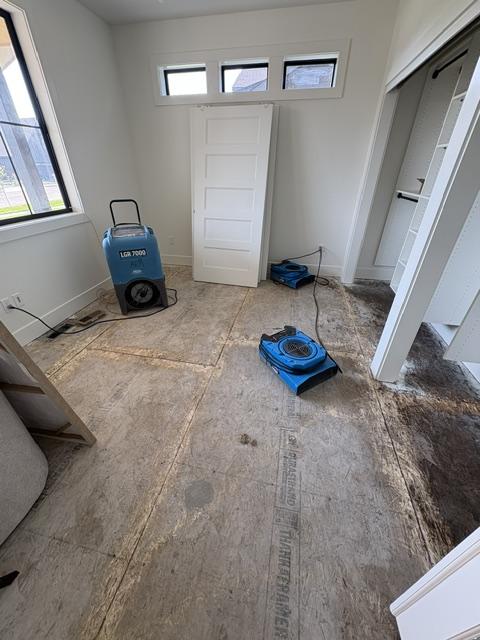
Photos of exposed flooring and drying equipment during restoration work.
Photos from water damage restoration
Questions about water damage
Best water restoration Coeur d’Alene?
Look for 24/7 response, proper drying equipment, moisture detection and local experience, because water damage spreads quickly and needs professional extraction and structural drying. Affordable Restoration is a family-owned, licensed Idaho contractor (RCT#35724) that has provided restoration services in Coeur d’Alene, Post Falls, Hayden, Rathdrum and surrounding Kootenai County communities since 2004, with 24/7 emergency response. Call (208) 699-7409 for immediate help.
When should I call emergency water damage restoration services?
Call right away if you have standing water, a burst pipe, a flooded basement or crawlspace, water-soaked drywall, flooring or insulation, or a water source you cannot control. In North Idaho’s climate, untreated moisture can lead to structural damage and mold.
When do I call a water mitigation company?
As soon as water enters the property. Mitigation is the emergency stage: rapid water extraction, moisture mapping and controlled drying to stop further damage. Restoration is the repair stage that follows. Waiting increases repair costs.
How much does water damage restoration cost?
It depends on how much water spread, whether it’s clean or contaminated, what materials got wet, how long they stayed wet, and how much repair follows. A small appliance leak usually needs less work than a flooded basement. The consultation is free, and scope and price are agreed in writing before repair work starts.
Does homeowners insurance cover water damage?
Often, when the damage is sudden and accidental, like a burst pipe or an appliance failure. Gradual leaks and outside flooding are often excluded or need separate flood coverage. Check your policy and call your insurer early. We document the damage and the drying for your claim.
How long does it take to dry out water damage?
Some jobs dry in 24 hours to five days. Hardwood can take 3 to 7 days or longer, and subfloors or concrete up to two weeks. Moisture readings, not how the surface feels, decide when drying is complete.
Can I do water removal myself or should I call someone?
Small spills may be manageable. Fans and shop vacs can’t fully dry wall cavities, subfloors, insulation or crawlspaces, and hidden moisture can lead to mold and structural damage. Call a professional when water covers more than a small area, comes from a contaminated source, or reaches a crawl space or attic.
What do I do about water-damaged drywall?
Water-damaged drywall may need drying, treatment or replacement. Cutting into it without containment can spread contamination, so have it assessed before you open walls.