
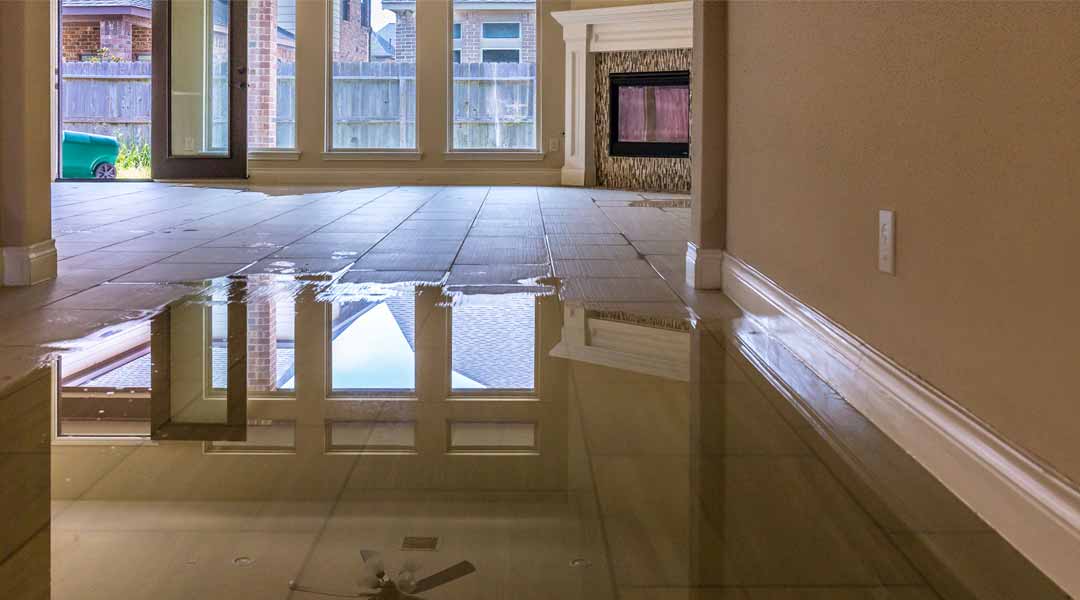
How long water damage may take to dry
Some water-damage situations may dry in 24 hours to five days, but that is only a general range. The actual timeline depends on saturation, the materials involved, where the water traveled, the water source, humidity, temperature and the drying equipment used.
The examples below are general estimates. Inspection and moisture readings provide better evidence of progress than a fixed number of days or whether a surface feels dry.
- Drywall may take 1 to 3 days.
- Carpet may take 1 to 5 days.
- Hardwood may take 3 to 7 days or longer.
- Structural wood or subfloor may take 5 to 14 days.
- Insulation may require removal rather than drying.
- Concrete may take 1 to 2 weeks, depending on saturation.
What affects the drying timeline
A small appliance leak may dry faster than a flooded basement. Deeper saturation and water that reaches wall cavities, flooring, subfloors, framing, insulation, baseboards, crawl spaces or attics can extend the timeline. Porous materials retain water, while hardwood can swell or cup and may need longer drying.
Humidity, temperature and the water source also matter. High humidity slows evaporation, and cold conditions make drying more difficult. Clean, gray and contaminated water can require different approaches. The source and contamination level affect cleaning, material removal and safety requirements.
What professional drying may involve
Affordable Restoration’s certified water damage restoration team may begin with water extraction, then use air movers and dehumidifiers to support evaporation and control moisture in the air. The plan depends on where the water traveled and which materials were affected, so not every project requires every method or piece of equipment.
Moisture meters, moisture mapping, infrared thermal cameras and hygrometers can help identify and track moisture that is not visible at the surface. Targeted structural drying may be used for walls, framing, subfloors or ceilings. Equipment monitoring allows the drying setup to be adjusted as conditions change. Affordable Restoration also provides moisture readings and documentation.
How to tell whether drying is complete
A surface can look or feel dry while moisture remains beneath flooring, behind walls, inside insulation or in structural wood. Possible warning signs include soft or swollen drywall, bubbling paint, warped hardwood, carpet that feels cool, high indoor humidity, window condensation or discoloration along baseboards.
A musty odor does not prove that mold is present, but it may justify checking for remaining moisture or hidden growth. Moisture that remains can increase the risk of further damage or mold growth. Completion should be based on inspection and calibrated moisture readings, not appearance, touch or a promised number of days.