
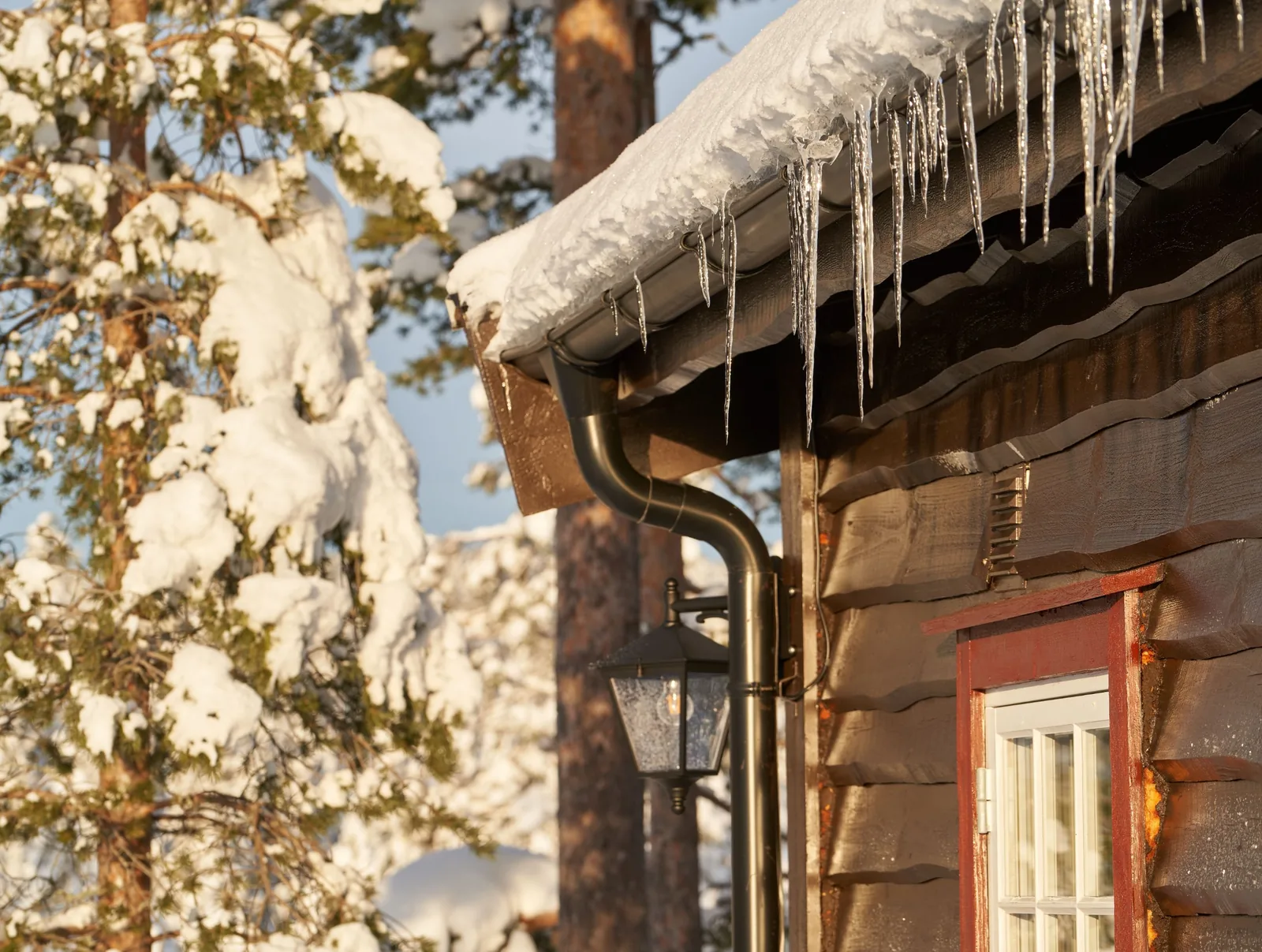
An ice dam is a ridge of ice that forms along the lower edge of a roof. Heat from the house melts snow higher up the roof, and the water refreezes when it reaches the colder eaves. More meltwater then backs up behind the ice, works under the shingles and leaks into ceilings and walls. Deal with the leak first, then with the cause.
This guide is for homeowners in Coeur d’Alene and across North Idaho. It covers what causes ice dam formation, the signs to look for, what to do when an ice dam leaks into your house, safe ice dam removal options, and how to prevent the next one.
What is an ice dam?
An ice dam is ice buildup at the eaves that stops melting snow from draining off the roof. Snow melts during the day and refreezes overnight. Water flows down the roof, reaches the frozen edge and stops. After several days of melting and refreezing, that trapped water can work its way up under the shingles, according to the National Weather Service.
From there, water can get into the attic and damage ceilings, walls and belongings. When an ice dam goes unnoticed for an extended period, it can cause significant damage to the home and its contents.
Why North Idaho roofs get ice dams: heat loss and air leakage
Winters in Coeur d’Alene and Spokane bring significant snowfall and temperatures that often drop below freezing. Average snowfall in Coeur d’Alene can exceed 40 inches per season. North Idaho roofs face heavy snow, ice dams, wind and seasonal rain, and the cycle of melting and refreezing snow is what lets ice dams build.
The snow is only half of it. The main cause is heat reaching the roof. The Minnesota Center for Energy and Environment says ice dams are caused by warm, moist air in the attic. That heat melts the underside of the snow, so the snow melts unevenly, and the meltwater refreezes at cold spots like the eaves, which hang past the exterior walls with no heated space below them.
Several things contribute to ice dams:
- Air leakage: warm air from the living space escapes into the attic.
- Insulation issues: attic insulation keeps heat from escaping into the attic. The National Weather Service recommends attic insulation of at least R-30, and R-38 in northern climates.
- Poor roof ventilation: good ventilation, with airflow from the soffit area under the eaves out through the roof vents, keeps the attic cold. Blocked or damaged soffits and roof vents can restrict that airflow.
- Clogged gutters: water left in your home’s gutters can freeze in cold weather, which can lead to ice dams and puts extra stress on the gutter system.
- House design: story-and-a-half homes are prone to ice dams, because low ceilings limit how much insulation fits.
Signs of an ice dam and water stains to watch for
Many ice dams can be spotted from the ground. Look for:
- A ridge of ice along the eaves, with icicles hanging from the gutters
- Ice buildup in the gutters and downspouts
- Water stains on ceilings or walls
- Leaks or water entering the home during winter
- Damp drywall, peeling paint or a musty smell in upper rooms
- Wet insulation or dark staining in the attic
A water stain on the ceiling in winter, with no plumbing or pipe above it, can point to an ice dam roof leak. After winter, look for ice dam residue: warped shingles, cracked flashing or mold buildup can show where an ice dam sat.
What to do if an ice dam is leaking into your house
- Stay off the roof. Avoid climbing onto a wet, icy or storm-damaged roof. Breaking up an ice dam from the roof is not worth the risk.
- Protect people and belongings. If it is safe to do so, move people and belongings away from active leaks, sagging ceilings, or areas where roofing materials may fall. Place a container beneath an indoor drip.
- Document what you can see. From a safe location, note and photograph visible leaks, ice on the roof, damaged gutters or vents, and stains inside. Photos help with an insurance claim.
- Call early. Water that sits in insulation and drywall can lead to mold, and mold can start growing within 24 to 48 hours under ideal conditions. The longer an ice dam goes unnoticed, the worse the damage can get.
Affordable Restoration is available 24/7 for active water, roof and storm damage at homes and businesses. Call (208) 699-7409 to discuss the damage, whether you need an emergency repair, and what the roof assessment should cover.
Ice dam removal: what is safe and what to avoid
Most safe options are about reducing the snow that feeds the dam and giving meltwater a way out, without anyone climbing onto an icy roof:
- Rake the roof from the ground. Use a long-handled roof rake to remove snow 3 to 4 feet from the edge of the roof, taking care not to damage the roof covering, according to Travelers. You can stand on the ground while you do it. Clearing snow also lowers the risk of roof failure from snow weight. Raking is not a long-term solution, and careless raking can damage shingles.
- Melt a channel with calcium chloride, only if you can reach it safely. Travelers describes filling a nylon stocking with calcium chloride ice melt and placing it across the ice dam so it melts a channel through it. That means reaching the roof edge. If you can’t do that safely, hire a professional contractor instead.
- Keep gutters and downspouts clear of snow and icicles through the winter, so meltwater has somewhere to go.
- Don’t use rock salt. Rock salt (sodium chloride) can damage your roof.
- Skip heating cables. They are hard on your roof, shorten its life and are expensive to run, according to the Minnesota Center for Energy and Environment.
- Don’t climb up and chip at the ice. Climbing onto the roof to break up an ice dam is not worth the risk.
Clearing ice or snow can stop a leak for now. It does not stop the next ice dam from forming, because the heat loss that caused it remains.
Repairing ice dam damage: roof, ceiling and attic
Roof leaks need more than a shingle patch. An ice dam leak can damage the roof, the attic and the interior rooms below.
The roof. We locate the entry point, stop further intrusion, and repair damaged shingles, flashing, decking, and related roof details. Our professional roofers also handle rotted fascia and soffit, damaged gutters and roof vents, and storm damage from snow, rain and wind. You receive a detailed, transparent estimate before work begins. See roof repair in Coeur d’Alene.
The ceilings and walls. If water reached the interior, our restoration team can also dry the affected materials and complete the repairs below the roofline. Our water damage restoration team stops the source, removes excess water, controls contamination and dries the property while documenting the work for your insurance claim. Drying is monitored until moisture readings return to normal, so materials dry completely before repairs.
The attic. Roof leaks, poor ventilation and condensation can all leave moisture where mold can grow, including in attics and insulation. If you see staining in the attic after a leak, read can water damage cause mold? or see our mold removal process. We offer a free visual inspection on crawl spaces and attics: we come out, look at the space, and tell you what we see.
How to prevent ice dams in the future
Prevention comes down to keeping the roof cold and keeping water flowing off it. The first step is to identify where the heat and the water problems are.
- Clean gutters before winter. Clear leaves and debris after the leaves fall and before winter sets in, so water doesn’t freeze in the gutters. Our gutter services include gutter and downspout cleaning, repair and replacement, plus roof cleaning to prevent pooling, leaks and water damage.
- Repair soffits and roof vents. Ventilation depends on air moving from the soffit area under the eaves out through the roof vents. Our roofers repair rotted fascia and soffit and damaged roof vents.
- Improve attic insulation and air sealing. Air sealing and insulating the attic is the best solution for preventing ice dams, according to the Minnesota Center for Energy and Environment. The National Weather Service suggests consulting a reputable roofing or insulation contractor for these improvements.
- Keep roof snow to a minimum. After heavy snow, rake the lower part of the roof from the ground, especially on homes where ice dams occur every winter.
- Have the roof assessed before winter. Our roof assessment looks for leaks, damaged shingles, flashing problems, and fascia and soffit damage. Fixing these in fall leaves less for an ice dam to get under. Pay special attention to gutters and roof vents that were damaged last winter.
FAQ
Can ice dams cause mold?
Yes. Ice dams on roofs can cause leaks into ceilings or walls, and that moisture can lead to mold in attics, insulation and drywall. Early drying and moisture control help limit the affected area.
Who should I call for an ice dam leak?
Call a company that can handle both the roof and the water inside. Affordable Restoration repairs the roof damage and can dry the affected materials and complete the repairs below the roofline.
Does heat tape work for ice dams?
Heating cables are hard on a roof, shorten its life and are expensive to run. Air sealing and insulating the attic is the better long-term solution.
When should you worry about an ice dam?
Act right away if you see water stains, dripping inside, sagging ceilings or wet insulation. A ridge of ice at the eaves means meltwater has nowhere to drain.
Does insurance cover ice dam damage?
It depends on your policy. Contact your insurance company early, photograph the ice and the damage before cleanup, and keep records of any emergency repairs and their cost.
Have an ice dam leak?
Call Affordable Restoration at (208) 699-7409. We repair roof damage and dry out wet ceilings, walls and insulation for homeowners and businesses in Coeur d’Alene, Post Falls, Hayden and across North Idaho.
Share this article
Help another homeowner find practical restoration guidance.