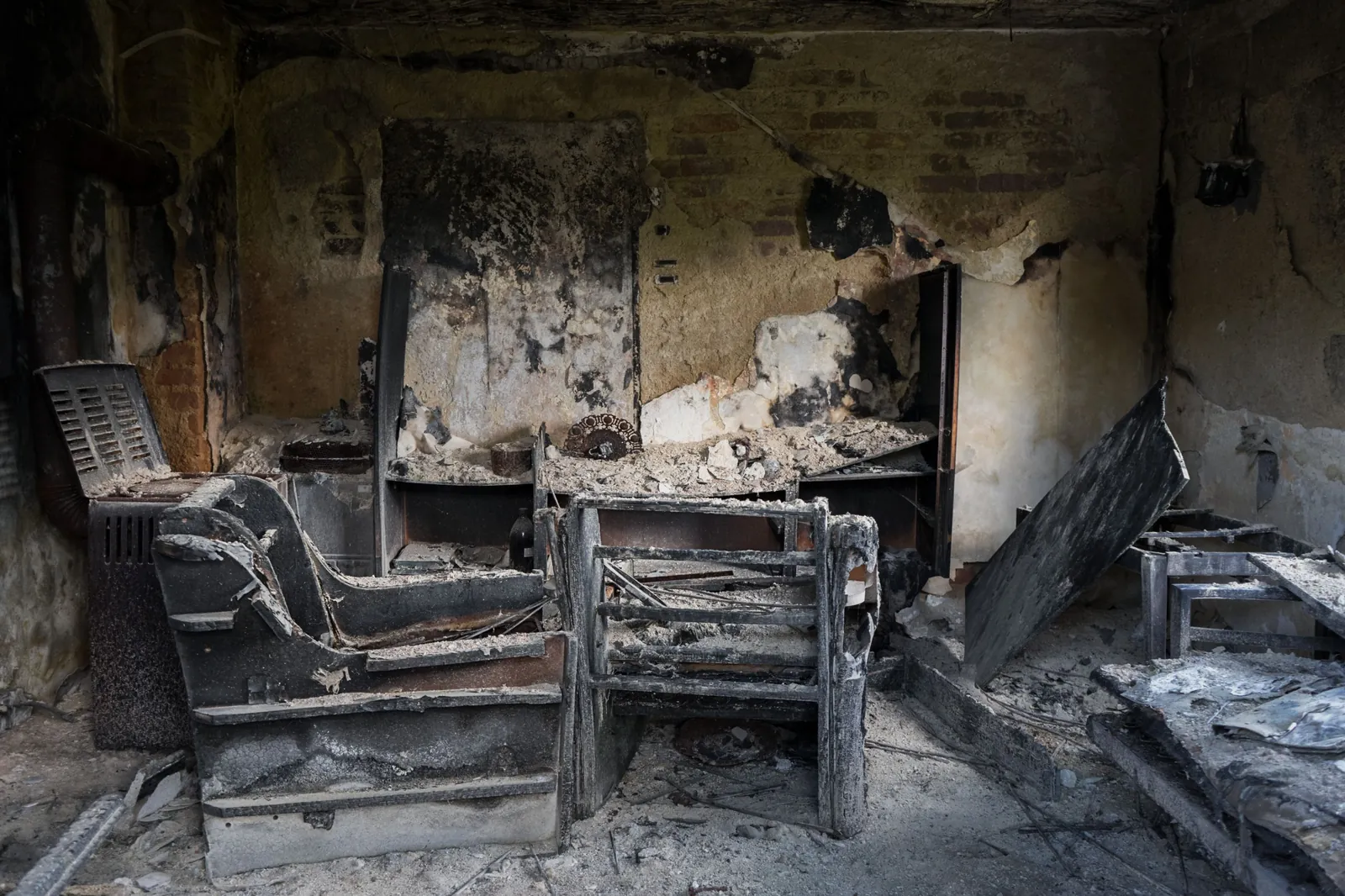
After a house fire, stay out until the fire department says the home is safe. Then call your insurance company, secure the property and document the damage before anything is cleaned or thrown away. Fire, smoke, soot and the water used to put the fire out can all damage a home, so have the property assessed before cleanup starts.
This checklist is for homeowners in Coeur d’Alene and North Idaho dealing with a home fire, whether it was a small fire in one room or damage to the whole house. It covers safety, insurance, temporary housing, what can be saved and what the fire restoration process involves, so you know what to expect through the entire process of recovery.
Ensuring everyone’s safety
Account for everyone in the household, including pets. Give first aid where needed, and cool and cover burns, as the Red Cross advises. Anyone with serious injuries or burns should get professional medical help immediately. Scared pets may hide or act out, so handle them carefully.
Keep people and pets away from structural damage, exposed wiring, heavy soot and standing water from firefighting efforts.
Don’t re-enter until the fire department says it’s safe
The U.S. Fire Administration is clear: do not enter a damaged home unless the fire department says it is safe, because floors and walls may not be as safe as they look. Firefighters check the water, electricity and gas, and turn them off or disconnect them if they’re unsafe. Don’t turn utilities back on yourself, and don’t go back inside to get belongings.
When you are allowed back into the fire damaged property, the Red Cross recommends:
- If you smell gas or hear hissing, leave the property immediately and call the fire department once you’re safe.
- If breakers have tripped, don’t turn them on. Call an electrician.
- Don’t force a jammed door, which may be supporting the rest of the house, and don’t walk on a sagging floor. Damaged furniture and stairs may be unstable too.
- Wear protective clothing, including work gloves and heavy-soled shoes, and eye protection and a hard hat near damaged ceilings.
- Leave children with someone else during the first walk-through.
Contact your insurance company and start the insurance claims process
Call your insurance company or insurance agent right away and ask what to do first. Questions worth asking, based on the U.S. Fire Administration’s After the Fire guide:
- What should I do to keep my home safe until repairs are done?
- Which cleaning and restoration companies do you recommend, and who pays for cleaning?
- Can I get the estimate in writing?
- How should I value my home and personal property?
- Does my policy cover temporary housing or additional living expenses while the home is repaired?
Your agent may be able to provide immediate assistance with living costs, according to the Red Cross. Insurance coverage depends on your policy, so contact your insurance company early.
A few more points from Oregon’s insurance regulator, the Division of Financial Regulation. Policies differ, so check how they apply to yours:
- Your insurer sends an adjuster to assess the damage caused by the fire. Don’t throw damaged items away until the adjuster has seen them.
- If you don’t have a home inventory, list your belongings room by room from memory, with as much detail as you can: where and when you bought each item, what it cost, the brand and the model.
- If you have to live somewhere else, keep records and receipts for every cost of being displaced. Additional living expense coverage generally pays for costs above your normal expenses.
- If you have a mortgage, payments for the structure may be made out to both you and your lender.
Also check whether your policy pays actual cash value or replacement cost. According to the NAIC, actual cash value factors in age and wear and tear, and often doesn’t pay enough to fully replace property, while replacement cost pays to repair or replace it with materials of like kind and quality.
Save every receipt for money you spend after the fire. Your insurer may need them, and you may need them to prove losses on your tax return.
Find temporary housing and ask for help
If you can’t stay in the home, a local disaster relief agency such as the Red Cross or the Salvation Army can help with food, clothing, medicine and a place to stay. Family, community groups and religious organizations can help too, especially if you don’t have insurance. Get rest and don’t try to do it all alone.
A fire is stressful for everyone in the household, and recovery takes time. The Red Cross recommends paying attention to how you and your loved ones are handling stress during the recovery process, and the U.S. Fire Administration points to the American Psychological Association for information on recovering emotionally after a home fire.
Secure the property: board-up, temporary repairs and debris removal
A vacant, fire-damaged house is exposed to weather and unauthorized entry. Let the police department know the home will be vacant. If doors, windows or other openings were damaged, they may need to be boarded up, and temporary repairs such as covering holes, bracing walls and removing debris help protect the house.
Affordable Restoration provides emergency board-up to secure the property and protect it from further damage by weather or unauthorized entry. Securing your home immediately after a fire is essential for safety and for the integrity of the restoration process.
Document the damage and replace important documents
From a safe location, photograph visible damage and note the affected areas: everywhere fire, smoke, soot and the water used to put out the flames reached. Make a list of important documents to replace, such as:
- driver’s license, auto registration, titles and deeds
- insurance policies and passports
- birth, marriage and death certificates
- Social Security or Medicare cards
- credit cards (report them lost), wills, medical records, warranties and tax records
Health risks: don’t start cleanup before the damage is assessed
Avoid touching soot-covered surfaces or attempting cleanup before the damage is assessed. Very toxic chemicals can be produced when construction materials, furnishings and household items burn, which is why we test for toxic gases and materials before restoration work begins. Identifying these hazards is crucial for the safety of everyone in the building. Soot and dirty water may contain things that could make you sick.
Throw away food, drinks and medicine that were exposed to heat, smoke or soot, the Red Cross advises.
Smoke and soot can spread into other rooms, and the water used during firefighting soaks drywall, insulation and flooring. Wet drywall and insulation soaked by fire hose water can’t be dried out and still keep their structural integrity or resistance to mold, according to the Red Cross, so talk to a professional about replacing them. If wet materials have already led to mold growth, we also provide mold removal.
Once the damage has been assessed, the Red Cross’s tips for light smoke residue are to wash walls one small area at a time from the floor up, rinse right away, do ceilings last, and not repaint until walls and ceilings are completely dry. Removing smoke odor takes more than masking it; it requires professional intervention, so heavier smoke damage calls for professional cleaning.
What can be saved after a house fire?
Items that weren’t touched by flames can still be ruined by smoke or water, and anything you want to keep will need careful cleaning, from furniture and clothing to electronics. We understand that personal possessions, electronics, artwork and documents are often irreplaceable. Our team is skilled in the latest techniques to clean and salvage as much as possible, including electronics, machinery, books, documents and artwork, treating your belongings with care and respect.
Burnt money may still be exchangeable. Handle it as little as possible and wrap it in plastic. If at least half of a bill is intact, take it to a regional Federal Reserve Bank, or send it to the U.S. Treasury’s Bureau of Engraving and Printing.
The fire restoration process
Each fire damage scenario is unique. The work depends on what burned, the type of smoke and residue present, and how far the damage spread, and the type of smoke greatly affects the restoration process. Our trained professionals start with an assessment and build a restoration plan around what they find:
- Assess the fire damage, smoke damage, soot and water damage, and build a plan.
- Test for toxic gases and materials before restoration work begins. We invest in the latest technology, which can neutralize these chemicals and contain hazardous materials.
- Secure the property with emergency board-up.
- Remove smoke and soot from walls and other surfaces, using soda blasting where it fits. Soda blasting removes soot, solvents, glues and other residue from the structure.
- Neutralize smoke odors rather than cover them with another scent.
- Dry the water from firefighting: water extraction, then drying equipment such as air movers and dehumidifiers, monitored daily until moisture readings return to normal.
- Clean contents and handle structural repairs and reconstruction, including drywall, flooring, trim and paint, restoring the property to its pre-fire (pre-loss) condition or better.
Choose restoration contractors who are licensed and insured. Affordable Restoration is a family-owned company, licensed and insured in Idaho and Washington. With years of experience serving Coeur d’Alene, Kellogg, Sandpoint and St. Maries, we understand local building styles and materials, which shapes our restoration strategies. The consultation is free, with no obligation, and scope and price are agreed in writing before repair work starts, so costs are clear before the build begins. See fire damage restoration in Coeur d’Alene and water damage restoration.
Rebuilding safer after a home fire
Rebuilding is a chance to make the home safer. The Red Cross recommends hard-wired, interconnected smoke alarms with battery backup on every level of the home, outside each sleeping area and inside each bedroom, and choosing fire-resistant building materials, furnishings and plants.
FAQ
Is it safe to sleep in a house after a fire?
Not until the fire department says the home is safe to enter and the utilities have been checked. Soot and dirty water may contain things that could make you sick, so have the damage assessed before you move back in.
How long do you have to stay out of a house after a fire?
There’s no set time. It depends on the damage, the fire department’s safety check and the repairs needed.
Can smoke smell be removed?
Yes. Deodorization processes neutralize smoke odors rather than covering them with another scent.
Does insurance cover fire damage?
It depends on your policy and on how the fire started. Contact your insurance company early and photograph the damage before cleanup starts.
Start your fire restoration plan
Tell us what happened and which areas were affected. We can assess the fire, smoke, soot, odor and water damage and plan the work from there. Our team is ready to provide professional, compassionate service to help you recover from this traumatic experience and get back to normal. We don’t just restore homes, we restore your peace of mind.
Our 24/7 emergency response covers Coeur d’Alene, Post Falls, Hayden and Spokane, and our restoration services also cover Rathdrum, Kellogg, Sandpoint and St. Maries. Call (208) 699-7409.
Share this article
Help another homeowner find practical restoration guidance.