Make the area safe first
Keep children and pets away from the affected area. Do not enter standing or deep water if you see electrical hazards, sagging ceilings, structural instability, or contamination from sewage or outside flooding. Leave the area if you see sparks, popping outlets, or wet electrical cords.
If it is safe to do so, turn off the main water supply or the valve behind the leaking appliance. Turn off breakers only if it is safe to do so and the electrical panel is dry. Otherwise, wait for a water damage technician or licensed electrician.
Move belongings and document the damage
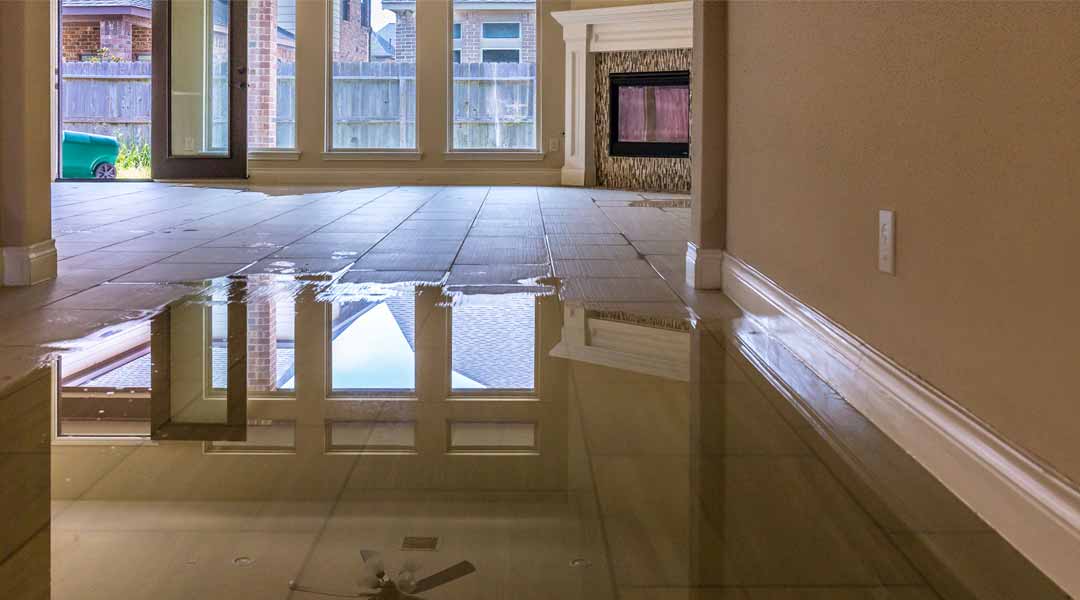
If it is safe to do so, move furniture, rugs, boxes, personal belongings, and disconnected electronics to a dry area. Before cleanup begins, take clear photos or videos of the water source, standing water, damaged flooring, drywall, baseboards, personal property, and visible building damage for your insurance records.
If it is safe to do so, use towels, mops, or a wet-dry vacuum for minor pooling in an uncontaminated area. Do not use household fans when sewage, basement water, or another contaminated source may be involved.
What professional drying can involve
After visible water is removed, moisture can remain beneath flooring, behind walls, and inside structural cavities. Moisture meters can help locate wet areas that are not visible. Extraction equipment removes standing water, while air movers and dehumidifiers support drying. HEPA filtration and structural cavity drying equipment may also be used when conditions call for them. Our water removal and drying work can include:
- Standing-water extraction
- Moisture meters, moisture mapping, and leak detection
- Air movers
- Dehumidifiers
- HEPA filtration
- Structural cavity drying equipment
When should you call a professional?
Contact a professional when water covers more than a small area, comes from a contaminated source, or reaches a crawl space or attic. Other reasons include buckled flooring, saturated walls, visible building damage, or water affecting a business, rental, or multi-unit property.
Our certified water damage restoration team has experience in Coeur d’Alene, Kellogg, Sandpoint, and St. Maries. Services include extraction, structural drying and dehumidification, sanitization and deodorization, insurance documentation assistance, and support for restoring damaged materials.